
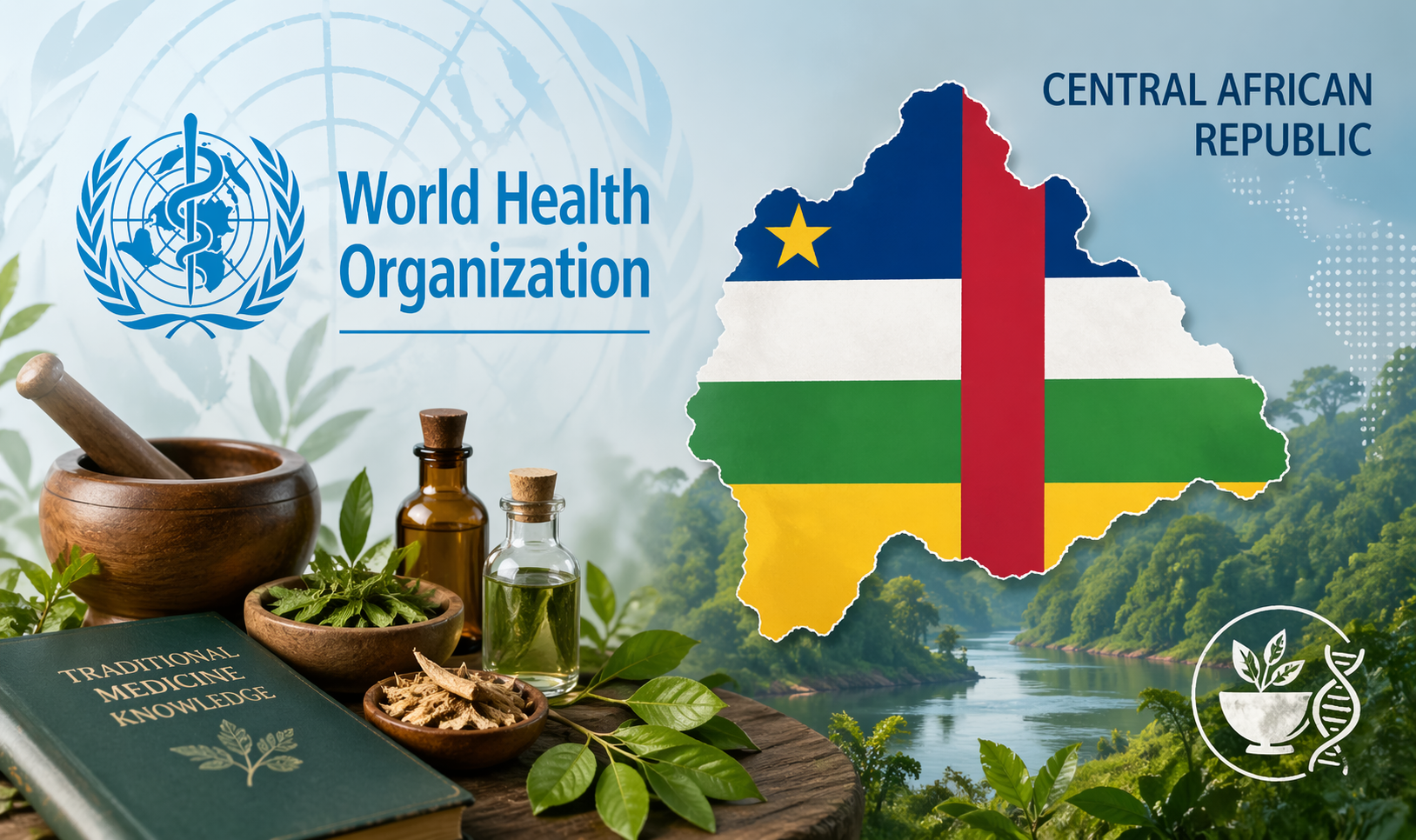
Oleh: Malika Qaira N. H. Efendi, Siswa Kelas X SMA Bina Insani Bogor
Mata Akademisi, Milenianews.com – The systems of traditional medicine hold an important role in global medical treatment and healthcare, as evidenced by the Alma-Ata Declaration in 1978, which recognizes the role of traditional medicine and its practitioners in achieving Health for All (HFA). Through vast variations of knowledge, herbs, and cultures, traditional medicine plays a key role in assisting to solve numerous disease outbreaks all over the world. For example, the use of the drug Artemisinin/Qinghaosu (Artemisia annua), discovered by scientist Tu Youyou and her team in 1972, could help treat Malaria (Plasmodium falciparum) by drinking Artemisinin-based tea, or by using a more improvised method recommended by the World Health Organization, Artemisinin based Combination Therapies (ACTs) (Shana Potash, 2015). However, in the era where biopiracy exists, The Central African Republic asserts that our indigenous medical knowledge is a vital national asset; however, without robust international legal frameworks, this heritage remains vulnerable to exploitation and biopiracy by external actors. Some countries, such as Kenya, Mozambique, South Africa, and Zimbabwe, are reviewing their legislation to conform to the Trade-Related Aspects of Intellectual Property Rights (TRIPS) and the African Union’s legislation on the protection of traditional medical knowledge of indigenous people (Dr. Rufaro Chatora, 2003).
The Central African Republic, although having an immense amount of biodiversity and being rich in natural resources, ranks among the countries with the lowest Gross Domestic Product per capita globally (IMF, 2025). This economic stagnation is further highlighted by the Human Development Index (HDI), which places CAR among the lowest globally, signalling critical deficits in health, education, and living standards. At the same time, the health system in the CAR is barely functioning, whether it’s due to a severe shortage of skilled health workers, a lack of medical supplies, or a lack of appropriate health facilities. With these conditions, people remain extremely vulnerable to disease outbreaks like cholera, Mpox, COVID-19 and Ebola (PHSA CAR, 2025). The weak healthcare system in CAR has resulted in some of the world’s highest mortality rates. In CAR, the health system is extremely fragile, with insufficient service provision in terms of both quantity and quality. The main obstacles to accessing care include the lack of medicines, the high cost of consultations, the distance from health facilities and long waiting times (PHSA CAR, 2025). There is a significant shortage of qualified health workers. Central African Republic remains heavily dependent on international humanitarian assistance, rendering it particularly vulnerable in a context of significant reductions in aid.
Valuing the state sovereignty, Central African Republic supports The Global Traditional Medicine Strategy 2025–2034 in ensuring universal access to safe, effective, and people-centred traditional, complementary, and integrative medicine (TCIM). The Government of the Central African Republic, emphasizes that state sovereignty is inextricably linked to health sovereignty. CAR seek to formalize the role of traditional practitioners not merely as auxiliaries, but as recognized partners in a unified health system. CAR uphold the First Pillar of Responsibility to Protect (R2P), asserting that the international community must assist the State in building internal capacity. This includes protecting CAR’s intellectual property under the Organisation Africaine de la Propriété Intellectuelle (OAPI) and the Nagoya Protocol (“to receive a fair share of benefits when their resources or knowledge are used for research or commercial purposes”), ensuring that the “Savoir-faire” (“know-how’’) of CAR’s indigenous tribes—such as the Aka people—is not commodified by foreign interests without prior informed consent and transparent benefit-sharing . Therefore, to support the development of the healthcare systems in Central African Country in ensuring better healthcare and treatment environment, Central African Country proposes several norms that could serve as a basis of the policy directions, with the following arrangements:
1. Digital Ethnobotany & Blockchain for Traceability (DEBT)
Fostering the World Intellectual Property Organization (WIPO) standards for Traditional Knowledge, CAR intends to implement a digital, encrypted database using Blockchain technology. This ledger will record the medicinal claims of indigenous communities, creating a permanent “proof of discovery” to prevent biopiracy. This ensures total transparency in the supply chain—from the primary forest to the global pharmacy— guaranteeing that any patented drug derived from CAR’s flora triggers mandatory royalties and reinvestment into the CAR National Health Fund, which would later be used to build humanitarian’s needs such as hospitalities or research labs.
2. Indigenous Knowledge Accepting Network (IKAN)
UNESCO Local and Indigenous Knowledge Systems (LINKS), CAR proposes the establishment of village-level training centers. These centers will facilitate a “Circular Education” model where traditional healers and medical students from the University of Bangui exchange expertise. Traditional healers will receive training on clinical symptoms and sterilization, while medical students will learn botanical identification. This aims to eliminate the academic stigma against traditional medicine and modern facilities, reducing mortality rates in isolated regions in CAR.
3. The “Tripartite Rainforest” Protocol (Cross-Border Law)
Formalization of the Tripartite Indigenous Resource Protocol (TIRP) among the Congo Basin Member States, creating a unified legal front that prevents “forum shopping” by external researchers and ensures that any medicinal plant harvested across the shared borders of the Central African Republic is subject to a single, high-standard royalty framework. Central African Republic believes that safeguarding indigenous knowledge of traditional medicine is necessary. Thus, CAR hopes that the proposals could further be discussed in the upcoming assembly.
Tonton podcast Milenianews yang menghadirkan bintang tamu beragam dari Sobat Milenia dengan cerita yang menghibur, inspiratif serta gaul hanya di youtube MileniaNews.